History & Origins of Dolls
The doll is humanity’s oldest and most enduring toy. Its story runs from the fire-hardened clay of the Stone Age to the injection-moulded plastic of the twentieth century — and at every stage it reflects how people lived, believed and imagined.
Prehistory & the first figures
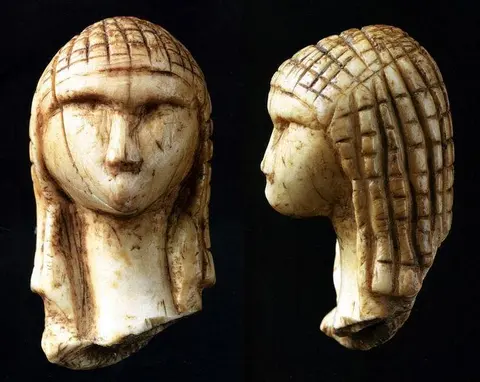
Long before recorded history, human beings shaped small figures of themselves. Some of the oldest known human-form objects — carved figurines of bone, stone and fired clay — are tens of thousands of years old. Scholars debate which of these were ritual objects, fertility charms or ancestral images, and which were genuinely toys for children. The honest answer is that the line between idol and plaything was often blurred: the same little figure might be prayed to and played with in a single lifetime.
What is clear is that by the Neolithic period, people across the world were making durable human figures from fired clay. Once agriculture tied communities to a place, objects survived long enough for archaeologists to recover them, and the record fills with modelled bodies, jointed limbs and painted faces. The impulse behind them is one of the most human things we know: to make a small version of ourselves.
Idol or toy?
Archaeologists distinguish a doll from a religious idol partly by context — a figure found in a child’s grave, worn smooth by handling, or with movable limbs is more likely to have been played with. But many cultures made no firm distinction at all, and a doll could serve as companion, teacher and offering at once.
Ancient civilisations
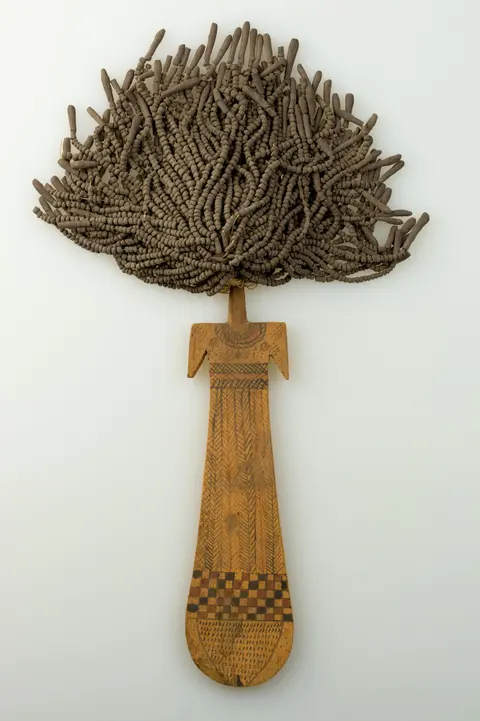
In ancient Egypt, flat wooden “paddle dolls” have been recovered from tombs dating back roughly four thousand years. Carved from thin planks and decorated with painted patterns and hair made from strung beads of clay, they were placed with the dead — whether as toys, servants for the afterlife or fertility symbols is still discussed. Either way they are among the earliest recognisable dolls we can point to.
Across the ancient world — in Mesopotamia, the Indus Valley, China and the Mediterranean — similar figures appear again and again in clay and terracotta. The Indus Valley Civilisation left behind small modelled figures and animal toys with moving parts; ancient China produced figures for burial and for play. The materials differ with geography, but the idea travels everywhere people do.
Greece & Rome
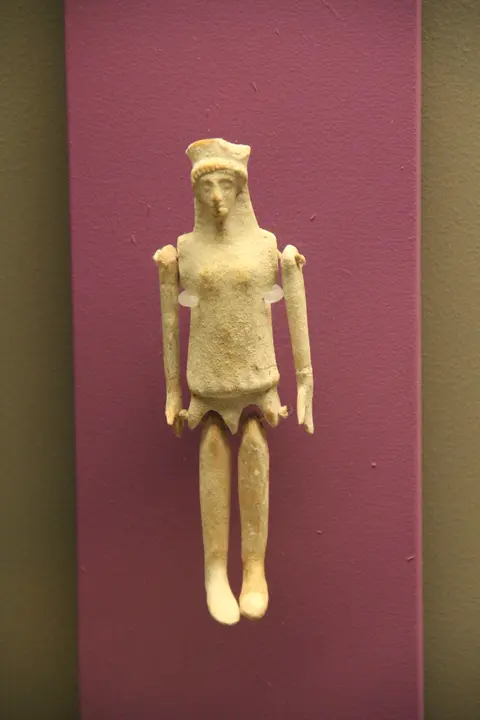
Classical Greece gives us some of the first dolls we can confidently call toys. Terracotta figures with articulated, string-jointed limbs — arms and legs that swung freely — have been found in children’s graves across the Greek world. Greek and Roman girls played with these plangon and pupa figures, and there was a poignant custom: on the eve of marriage, a girl would dedicate her childhood dolls to a goddess such as Artemis, formally setting aside childhood.
The Latin word pupa (“girl, doll”) is the ancestor of the English word “puppet” and of “pupil” in the eye — from the tiny reflected figure you see in another person’s eye. Roman dolls could be surprisingly fine, and a few ivory examples with jointed limbs and even miniature jewellery have survived from the graves of wealthy children.
Medieval & early modern Europe
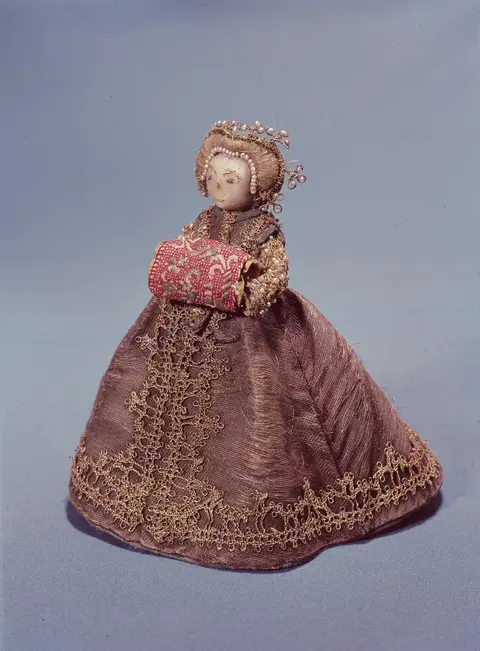
Through the medieval centuries, most European children played with simple dolls of cloth, wood and clay, made at home and rarely surviving to the present. By the later Middle Ages, craft centres in the German-speaking lands — especially Nuremberg and Sonneberg — were turning out wooden and clay dolls in enough quantity to trade widely. These “Docken” were an early commercial toy industry.
In the same period, richly dressed fashion dolls called Pandoras travelled between the courts of Europe, showing off the latest styles from Paris and beyond — a doll as a three-dimensional fashion magazine, long before printed catalogues.
The golden age of dolls
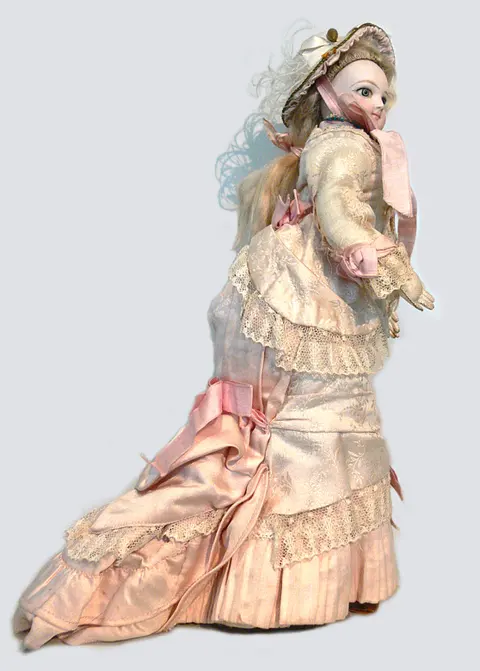
The eighteenth and nineteenth centuries are often called the golden age of the doll. Fine wooden dolls gave way to wax, then to glazed china and finally to bisque — unglazed porcelain with a soft, skin-like finish. French and German makers such as Jumeau, Bru, Kestner and Simon & Halbig created exquisite bisque-headed dolls with glass eyes, real hair and elaborate wardrobes. These were luxury objects for well-off families, and today they are among the most collected antiques of all.
Bébé and the child-doll
A key nineteenth-century shift was from dolls modelled as fashionable adult women to the bébé — a doll shaped like a real child. It changed how children played: instead of dressing a tiny grown-up, a child could nurture a doll like a younger sibling. That idea still shapes the baby and toddler dolls of today.
Industry & the modern doll
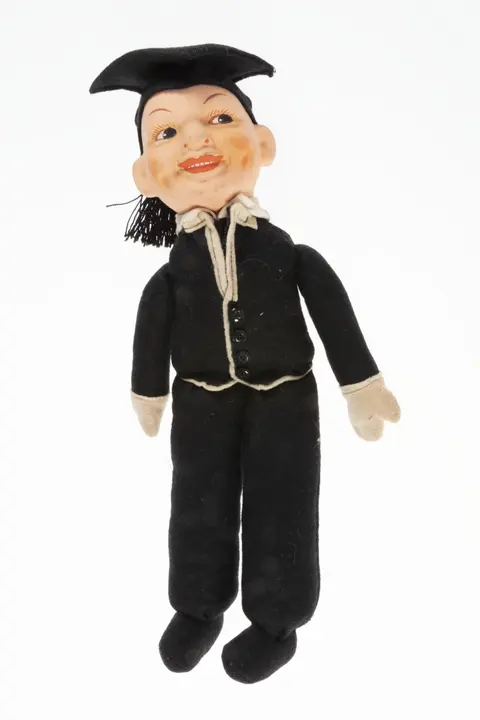
Industrialisation made dolls cheaper and more durable. Composition (a mix of sawdust, glue and other materials) replaced fragile porcelain in the early twentieth century, and then came hard plastic and vinyl, which could be moulded, painted and washed by the million. The doll left the drawing room and entered every nursery.
The twentieth century also produced global icons. Character and celebrity dolls, the soft-bodied companions of the early 1900s, the teenage fashion doll that arrived at the end of the 1950s, and later the soft, collectible and interactive dolls of the electronic age — each became a cultural landmark and a mirror of its era’s ideas about childhood, beauty and play.
The doll today
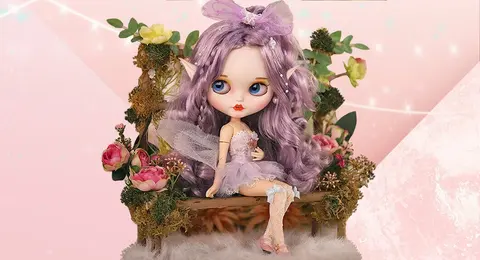
Today the doll spans an enormous range: mass-market toys and one-of-a-kind artist pieces; nostalgic reproductions and cutting-edge collectibles; culturally specific dolls celebrating heritage, and inclusive lines designed to reflect every kind of child. Meanwhile the ancient roles endure — ritual figures, protective charms and memory objects are still made and used across the world.
To trace this history is to see a single, unbroken thread running from a Stone Age hearth to a modern toy shelf. Explore how these forms differ around the globe in World Cultures, learn the field of shapes and materials in Types & Varieties, or step into the workshop in Craftsmanship.
Further reading on doll history
Deepen your understanding with these authoritative histories:
Note: Datings and attributions in doll history vary between scholars and continue to be refined by new finds. We present the broad, widely accepted outline here.