Long before porcelain, Britain’s doll-makers worked in wood and wax — and in both they produced dolls now treasured by collectors the world over.
The Queen Anne wooden dolls
From the 1600s through to about the 1840s, English woodcarvers made the dolls collectors call “Queen Anne” (though they actually predate Queen Anne’s short reign of 1702–14). A typical example has a simple jointed body and a carved, gesso-coated face with stylised brows, brightly rouged cheeks and inset or painted eyes — grave, doll-like and unmistakable.
The age of wax
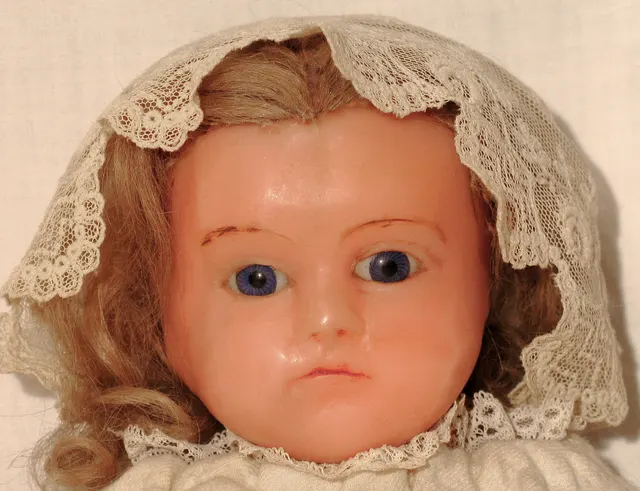
In the Victorian era, Britain led the world in poured-wax dolls, whose translucent skin looked eerily alive. The great names were the Montanari and Pierotti families (alongside makers such as Meech, Marsh and Lucy Peck). The Pierottis worked from the 1790s until 1935, with Henry Pierotti perfecting the poured-wax head; the Montanaris were famed for their exquisitely dressed dolls. Both made portrait dolls of royalty.
A lasting contribution
Between its wooden dolls, its wax dolls and its long tradition of homemade rag and cloth dolls, Britain’s contribution to the story of the doll is quietly one of the most significant in Europe — and much of it can be seen today in the collections of the V&A.
Frequently asked questions
What is a Queen Anne doll?
A “Queen Anne” doll is an English carved wooden doll made from the 1600s to about the 1840s, with a gesso-coated face, stylised brows and rouged cheeks. The style actually predates Queen Anne’s reign (1702–14).
Who made the famous English wax dolls?
The Montanari and Pierotti families led Victorian Britain’s poured-wax doll industry; Henry Pierotti perfected the poured-wax head, and both made portrait dolls of royalty.
Sources & further reading
Written in our own words from the references above and other reputable sources. Cultural traditions vary locally and scholarship evolves; corrections are welcome via our contact page.